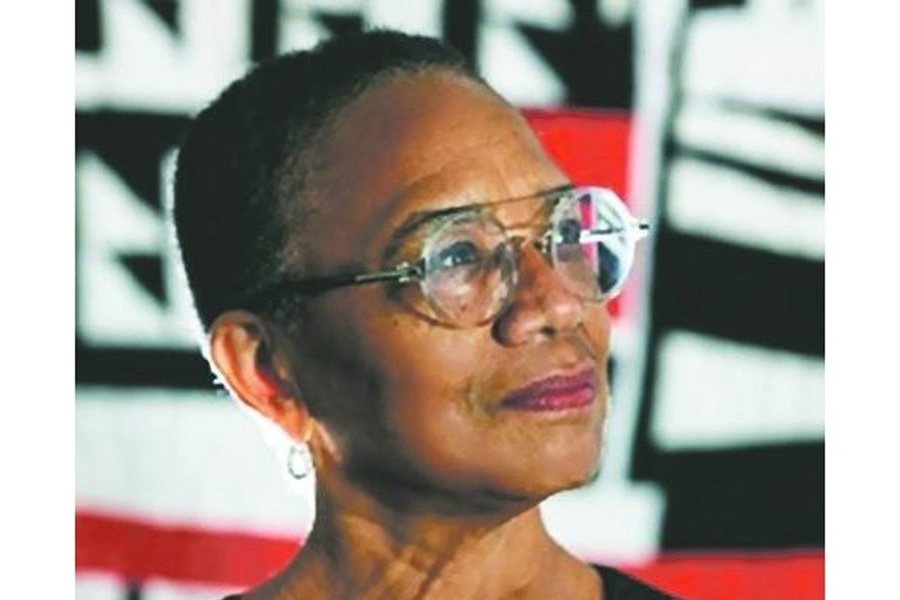
Quick Facts
| Basic Information | Details |
|---|---|
| Full name | Avis C. Robinson, also known publicly as Avis Collins Robinson |
| Born | July 26, 1953 |
| Died | October 28, 2023 |
| Birthplace | Baltimore, Maryland |
| Raised in | Montgomery County, Maryland |
| Education | Academy of the Holy Cross, University of Maryland, Golden Gate University, Harvard University |
| Known for | Artist, environmental policy leader, founder of Washington Metropolitan Scholars |
| Spouse | Eugene Robinson |
| Children | Aaron Robinson, Lowell Robinson |
| Family legacy | Public service, scholarship support, and a wide artistic footprint |
A Life Shaped by Talent and Purpose
Avis C. Robinson’s life was like a river with several bends, each leading to a distinct impact. She had multiple identities and lanes. She was an environmental policy specialist, nonprofit founder, mother, spouse, and artist with history. Family, discipline, and mission underpin her story of movement.
She was born in Baltimore and raised in Montgomery County, Maryland, in a structured and ambitious environment. After attending the Academy of the Holy Cross, she studied economics and urban studies at Maryland and earned graduate degrees from Golden Gate University and Harvard. That academic path reveals much. It suggests a mind that wants systems and people, theory and practice, city map and lived street.
Her life did not drift. It was built.
Education, Career, and Public Service
Avis C. Robinson began her professional life in environmental policy, where she rose to become Deputy Director of the EPA Office of Atmospheric Programs. That role alone signals serious expertise, responsibility, and trust. It placed her in the machinery of public policy at a time when environmental issues were becoming harder to ignore. Climate, air quality, and justice were not abstract ideas for her. They were part of the work.
Later, she shifted into another form of service by founding Washington Metropolitan Scholars. I think that choice says everything about her values. She could have rested on a successful government career, but instead she built a bridge for others. The organization focused on helping low-income, high-achieving minority students connect with top universities. More than 1,000 students benefited from that work. That is not a small number. That is a hall of opened doors.
In 2003, she left the EPA to devote herself fully to the nonprofit. By then, her reputation was already rooted in public service, but now it carried a more personal tone. She was not just shaping policy. She was shaping futures.
Avis C. Robinson as an Artist
In 2008, Avis C. Robinson moved into a new chapter, one that feels almost like a second life blooming from the first. She poured herself into painting and quilt work, and the results were striking. Her art explored race, gender, oppression, ancestry, and memory. The subjects were weighty, but her approach was visual and expressive rather than dry. She did not simply describe history. She stitched it, layered it, and made it breathe.
Her work often drew on African, European, and Native American ancestry, and she used visual language to connect personal history with public memory. That kind of art is like a lantern in a long corridor. It does not erase the darkness, but it makes what is there visible.
Her paintings and quilts gained attention from museums, galleries, and cultural institutions. One of her works, a mixed media portrait of Abraham Lincoln, was selected after a nationwide search for Ford’s Theatre. Her art also entered Smithsonian collections and was featured in exhibitions that framed her as an important voice in contemporary Black art. She became known not only for skill, but for vision.
Her final years carried a special poignancy. She was working on a seasonal quilt project that reflected on time, change, and the cycle of life. That project feels especially fitting for someone whose career itself moved through seasons, from policy to education to art.
Family and Personal Relationships
I think Avis C. Robinson is best understood through her surroundings. Family wasn’t secondary to her. It was central.
Journalist and Washington Post writer Eugene Robinson married her. Their 45-year marriage was a long journey of life, struggle, and history. An extended marriage is never a statistic. It has regular mornings, big decisions, and private loyalties.
Aaron and Lowell Robinson were her sons. Lowell and Aaron Robinson are also listed in public records. These names demonstrate her familial line and the personal life behind her public accomplishments. A mother who worked hard but yet had family obligations comes to mind.
Her obituary mentions her grandchildren Alice and Malcolm, which is touching. They show her legacy was more than institutional or artistic. Intimate, passed on through family bonds.
Public records list her daughter-in-law Maureen and sister Kirsten, occasionally Kirsten Ann Green. Her mother’s obituary lists her brothers Clark Chambliss Collins and Edward Rhodes Collins Jr. Edward Rhodes Collins Sr., a Montgomery County community development coordinator, and Annie Ruth Collins, the home matriarch, raised her. Harold A. and Donald Miles were foster brothers. The family map portrays a life of connection, not solitude.
Her Family Members in Focus
Eugene Robinson
Eugene Robinson was her spouse and longtime partner. He is a well known journalist, but in the story of Avis C. Robinson, he is also the person who shared her home life, her family life, and likely much of her inner world. Their long marriage suggests mutual respect and endurance.
Aaron Robinson
Aaron Robinson is one of her sons. He appears in the family record as part of the close circle that survived her. His place in the story reflects the generational thread running through her life.
Lowell Robinson
Lowell Robinson is her other son. He is also named in family references and survives as part of her immediate legacy. His presence helps show that Avis C. Robinson’s influence extended through both public work and private inheritance.
Alice
Alice is one of her grandchildren. Even though public information about her is limited, the mention of her name adds a human pulse to the record. Grandchildren often carry memory in a softer but powerful way.
Malcolm
Malcolm is another grandchild listed among her survivors. The naming of grandchildren gives the family portrait depth and reminds me that her story did not end with her own generation.
Maureen
Maureen is identified as her daughter-in-law. Her inclusion in the family record suggests the wider circle of people who shared in Avis C. Robinson’s family life.
Kirsten
Kirsten, also identified in some records as Kirsten Ann Green, is her sister. Sisters often serve as witnesses to a person’s earliest years, and her presence helps complete the picture of Avis’s family background.
Clark Chambliss Collins and Edward Rhodes Collins Jr.
These were her brothers, named in the family history associated with her mother’s obituary. Their inclusion shows that Avis C. Robinson came from a large family structure shaped by multiple siblings and close ties.
Harold A. Miles and Donald Miles
These were her foster brothers. Their inclusion points to a home life that extended beyond direct blood relation and included care, raising, and blended family bonds.
FAQ
Was Avis C. Robinson mainly known as an artist?
Yes, especially later in life. I would describe her as a multi dimensional public figure whose most visible later reputation centered on painting and quilt art, but her earlier career in environmental policy and her nonprofit leadership were also important parts of her identity.
What made her family life notable?
Her family life stood out because it was deeply connected to her public life. She was married to Eugene Robinson for 45 years, and she was a mother, grandmother, sister, and daughter. The family record is broad, and it helps show how anchored her life was in relationships.
What was Washington Metropolitan Scholars?
It was the nonprofit she founded to help talented students from underserved backgrounds reach top universities. I see it as one of her clearest acts of practical generosity, a structure built to widen opportunity.
What themes appeared in her art?
Her art explored race, gender, oppression, ancestry, and historical memory. She often used painting and quilting to turn social history into something visible, textured, and emotionally alive.
Why does Avis C. Robinson matter?
She matters because she joined service, scholarship, art, and family into one life. I think of her as someone who did not choose between intellect and creativity, public duty and private devotion. She carried all of them at once, like a hand holding several lit candles without letting them go out.