Who Is Begona Plaza?
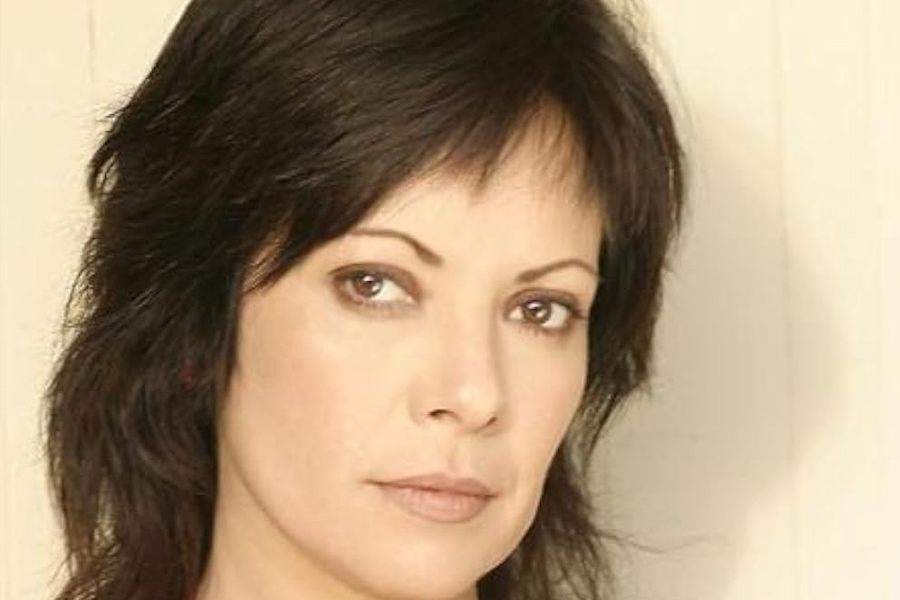
I consider Begona Plaza as a movement, memory, and reinvention artist. Born Begoña del Pilar Plaza Gill on July 12, 1966, in Bogotá, Colombia, Begona Plaza is also known as Begonya Plaza. She became an artist who worked in acting, writing, directing, documentary filming, playwriting, and music.
Early on, her story feels cinematic. Born in Colombia, she had a strong Basque family ancestry, spent part of her childhood in Spain, then came to California with her family. The geographic changes in her life were significant. They forged. Each locale seems to have shaped her imagination, giving her a complex identity that appeared in her plays, films, and performances.
What stands out most to me is how fully she has lived as a multidisciplinary artist. Some performers stay in one lane. Plaza built an entire crossroads. She moved between screen and stage, between public performance and private authorship, between historical memory and personal storytelling.
Early Life Across Colombia, Spain, and California
Begona Plaza’s early years were divided across several worlds. She was born in 1966 in Bogotá, then spent part of her childhood in the Basque Country of Spain after her family relocated there while she was still very young. Later, around age 7, the family moved again, this time to Los Angeles.
Such childhoods can break or strengthen people. Plaza appears to have done the latter. Each step probably increased her emotional vocabulary. Bogotá was her birthplace. The Basque Country provided her ancestry soil. She gained fame, ambition, and performance from Hollywood.
Her father owned a Hollywood Boulevard bakery, giving her story a personal touch. Scenes are painted. Real family life was formed through labor, regularity, and migration while Hollywood glittered nearby. That contrast is strong. Imaginary city on one side. Alternatively, a family hand-making a future like dough on a wooden table.
Plaza has said that her interest in acting began in childhood after repeatedly watching a television broadcast of a Sophia Loren film. That image feels important. A child sees a screen and senses a door. What began as fascination became vocation.
A Family Story Rooted in Basque Heritage
Family history appears to be one of the deepest currents in Begona Plaza’s life. Her public biographies describe strong Basque roots on both sides of her family. Her father was born in Gernika, in Euskadi, Spain, and her maternal family also carried Basque ancestry.
Her heritage feels like a pulse in her art, not a background fact. Gernika goes beyond a name. The city is one of the most iconic in contemporary European history. For family members, memory is never abstract. It weighs. Has ash.
Plaza’s later documentary work, especially her focus on Gernika, reflects that inheritance. Her art suggests a person who did not simply inherit family stories, but listened to them closely enough to turn them into creative testimony.
Begona Plaza’s Father and His Influence
Her father’s importance in her tale is clear despite his anonymity. His official testimonies indicate that he was a Basque from Gernika who survived through wartime Spain. These events may have influenced Plaza’s interest in history, identity, and intergenerational memory.
It appears like his influence operated on two levels, which is astounding. First was the practical father who helped construct a new life in California and owned a Hollywood bakery. Second, the memory carrier, whose experiences shaped his daughter’s creativity.
That kind of parental influence can act like an underground river. You do not always see it on the surface, but it feeds the whole landscape. Plaza’s documentary exploration of Gernika appears to have grown, in part, from her father’s memories and the emotional geography he passed down.
Her Mother and the Colombian Connection
Begona Plaza’s mother is less well-known, but what is known enhances the family image. She was Colombian and Basque by blood. Plaza remained Colombian by birthplace, blood, and culture via her mother.
I think this dual inheritance matters. Plaza was not simply a Basque-rooted artist born elsewhere. She was shaped by a richer fusion, Colombian and Basque, Latin American and European, old-world memory and new-world reinvention. That mixture may help explain the breadth of her artistic voice.
Entering Acting at a Young Age
Begona Plaza began acting professionally at about age 9. Starting that young can leave lasting marks. It means growing up not only in schools and homes, but also in rehearsal spaces, on sets, and inside scripts written by others.
Her training later included study with major acting teachers such as Geraldine Page, Michael Howard, Eric Morris, Herbert Berghof, and Jeff Corey. That list alone signals seriousness. These were not casual stops. They point to a disciplined commitment to craft.
When I consider her path, I see more than a child performer who stayed in the business. I see someone who built technique brick by brick. She appears to have pursued acting not as a passing opportunity, but as a lifelong language.
Film and Television Career
Begona Plaza featured in many films and TV shows in the 1980s and 1990s. Her film credits include Heartbreak Ridge (1986), Maid to Order (1987), Born on the Fourth of July (1989), Dark Justice (1991), Heat, and The Delta Force 2.
She also worked with major directors including Clint Eastwood, Oliver Stone, Michael Mann, Walter Hill, and Tim Hunter. For any actor, those collaborations matter. They place her within a professional circle shaped by some of the most recognizable filmmakers of their era.
What I find compelling is that her career was never defined solely by fame metrics. She built a body of work instead of a tabloid persona. That gives her professional life a different texture. It feels less like a fireworks display and more like a long-burning lamp.
Theater, Writing, and a Broader Creative Voice
Over time, Plaza increasingly focused on writing and theater. This shift feels natural to me. Many actors spend years lending their voices to other people’s stories before deciding to author their own. Plaza appears to have made that transition with purpose.
Her plays include Teresa’s Ecstasy, Persistence of Memory, The Brisket Brigade, and A Lucid Dream. Among these, Teresa’s Ecstasy reached a major milestone when it was produced Off-Broadway at the Cherry Lane Theatre in 2012.
Off-Broadway is more than a lesser stage, so that accomplishment matters. It often lets riskier, more intimate, and creative voices shine. Plaza’s diverse work fit there. Her work, particularly Persistence of Memory, was influenced by her time in Barcelona and interactions with Dalí family members.
There is a painterly quality in that detail. Barcelona, memory, Salvador Dalí, artistic lineage. These are not random ingredients. They suggest a creator interested in dream logic, identity, and the slippery line between history and imagination.
Documentary Filmmaking and Cultural Memory
Plaza’s work as a director and documentary filmmaker expands her profile even further. Her projects include The Real Gernika, Souvenir Views, American Hero, Gero Arte, and The Kiss.
A Tribeca Film Festival debut and TV exposure brought Souvenir Views to light. Her inner compass is revealed in The Real Gernika. Apparently, her father’s experiences influenced the Guernica bombing effort.
This tells me something essential about Plaza. She is not only interested in performance, but in preservation. She does not simply step into stories. She also excavates them. In that sense, her filmmaking acts like a lantern carried into family history and cultural memory.
Marriage and Former Spouse
Begona Plaza was married to Sebastian “Xano” Armenter, according to her bio. The marriage ended in divorce. Much is unknown about their connection, but it is publicly tied to her motherhood.
In many artist biographies, marriage appears as a brief factual note. Here, it also marks a chapter connected to Barcelona, family life, and a different rhythm from the public pace of acting and production work.
Daughter Caterina Armenter
Begona Plaza’s most publicly documented immediate family relationship is with her daughter, Caterina Armenter. Caterina was born in Barcelona, Spain, in 1992 and is often described as Plaza’s only child.
Barcelona appears frequently in Plaza’s adult life as a domicile and creative location, making this element particularly noteworthy. Her personal and artistic development seems to intersect in the city. The birth of her daughter there strengthens that tie.
Motherhood often changes an artist’s lens. It can sharpen themes of time, inheritance, protection, and memory. While public material does not overstate this influence, I suspect it added depth to the already strong family thread running through Plaza’s work.
A Life Lived Between Cities
One of the most distinctive features of Begona Plaza’s biography is her movement between places. After childhood in Colombia, Spain, and Los Angeles, she later lived between New York and Barcelona as she pursued acting, writing, and directing.
That mobility counts. Creative temps vary for artists living in different cities. New York is theatrical and literary. Barcelona has history, beauty, and Mediterranean complexity. Los Angeles has filmmaking equipment. Plaza borrowed from all three.
Her life has the shape of a map with bright pins across continents. Yet the map is not scattered. It has internal coherence. Family, memory, performance, language, and identity keep reappearing like constellations.
Career Snapshot
| Year | Milestone |
|---|---|
| 1966 | Born in Bogotá, Colombia |
| Early 1970s | Family moves to Hollywood, California |
| Mid-1970s | Begins acting professionally as a child |
| 1986 | Appears in Heartbreak Ridge |
| 1987 | Appears in Maid to Order |
| 1989 | Appears in Born on the Fourth of July |
| 1991 | Appears in Dark Justice |
| 1992 | Daughter Caterina Armenter is born in Barcelona |
| 2012 | Teresa’s Ecstasy is produced Off-Broadway |
| 2010s and beyond | Continues documentary, theater, and creative work |
Why Begona Plaza’s Story Stands Out
What makes Begona Plaza interesting to me is not just her resume, though it is impressive. It is the pattern beneath it. She is an artist whose life has been shaped by migration, multilingual identity, family history, and the courage to evolve.
She has worked in film, television, theater, documentary, music, and playwriting without reducing herself to a single label. Her life reads like a house with many rooms, each lit differently, each still part of the same home.
FAQ
Who is Begona Plaza?
Begona Plaza is a Colombian-born Spanish-American actress, writer, director, playwright, filmmaker, and singer born on July 12, 1966, in Bogotá, Colombia. She is also professionally known as Begonya Plaza and has worked across film, television, theater, and documentary projects.
What is Begona Plaza’s birth name?
Her birth name is publicly identified as Begoña del Pilar Plaza Gill. Some public records also list a longer variation of her name.
Where is Begona Plaza from?
She was born in Bogotá, Colombia, and has strong Basque family roots connected to Spain. She later lived in the Basque Country and then in Los Angeles, California.
Who are Begona Plaza’s parents?
Public biographies describe her father as a Basque native of Gernika, Spain, and her mother as Colombian with Basque ancestry. Their names have not been widely published in public profiles.
Was Begona Plaza married?
Yes. Public records identify her as formerly married to Sebastian “Xano” Armenter. The marriage ended in divorce.
Does Begona Plaza have children?
Yes. She has one publicly documented child, a daughter named Caterina Armenter, who was born in Barcelona in 1992.
What are Begona Plaza’s best-known works?
Her recognized work includes film and television appearances in Heartbreak Ridge, Maid to Order, Born on the Fourth of July, and Dark Justice, along with stage works such as Teresa’s Ecstasy and documentary projects such as The Real Gernika and Souvenir Views.
What is Teresa’s Ecstasy?
Teresa’s Ecstasy is one of Begona Plaza’s best-known plays. It received an Off-Broadway production at the Cherry Lane Theatre in 2012.
Why is Gernika important in Begona Plaza’s story?
Gernika is important because her father was born there and because the city’s history appears to have deeply influenced her documentary work and artistic interest in memory, identity, and Basque culture.
Is Begona Plaza still active?
Yes. Public profiles indicate that she continues to be associated with creative work as a playwright, filmmaker, and theater artist, though she maintains a relatively low public profile.