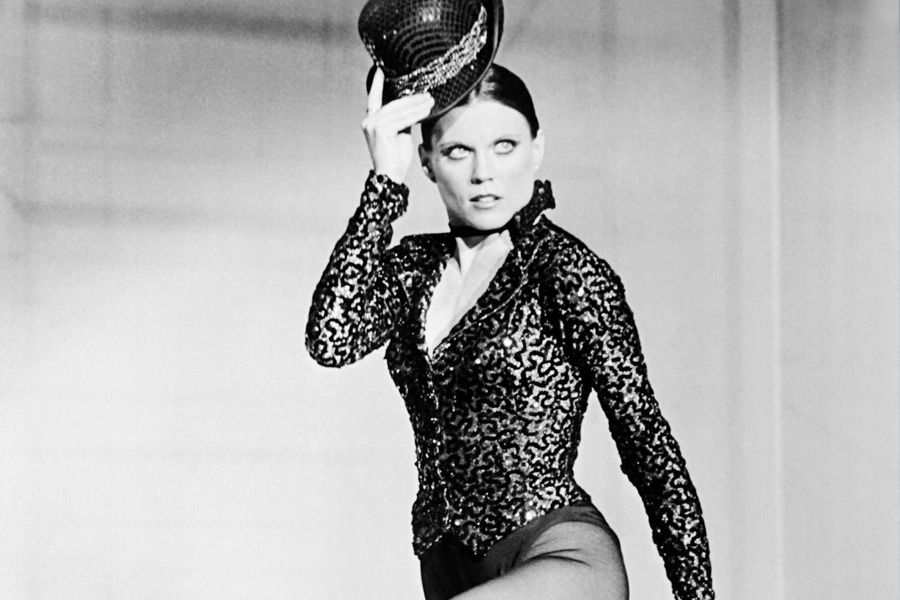
Basic Information
| Field | Details |
|---|---|
| Full name | Anne Reinking |
| Also known as | Ann Reinking |
| Born | November 10, 1949 |
| Birthplace | Seattle, Washington, United States |
| Raised in | Bellevue, Washington |
| Died | December 12, 2020 |
| Occupation | Dancer, actress, singer, choreographer, director |
| Best known for | Broadway revival of Chicago, Fosse style choreography |
| Child | Christopher Reinking Stuart |
| Spouses | Larry Small, Herbert Allen Jr., James Stuart, Peter Talbert |
| Creative partner | Bob Fosse |
A Star Who Moved Like Light
I think Anne Reinking belonged to that rare class of performers who seemed to carry rhythm in her bones. She was not only a dancer. She was not only an actress or choreographer. She was a whole stage weather system, bright and exacting, with a force that could turn a show into a landmark. When people speak about Broadway in the late 20th century, her name often rises like a spotlight. She became one of the most recognizable interpreters of the Bob Fosse style, and she helped shape the modern life of Chicago in a way that still echoes.
She was born in 1949 in Seattle and grew up in Bellevue, Washington, in a family that seems to have given her structure, encouragement, and enough room to become herself. That mix matters. A performer can have talent, but talent needs a home, a mirror, and a push. In Anne Reinking’s case, family was part foundation, part compass.
The Family That Framed Her Life
The family tale of Anne Reinking is one of her most genuine public moments. Behind the beautiful outfits and perfect stage lines was a daughter, mother, spouse, and sister with deep relationships.
Her dad was Walter Reinking. He was raised technically and practically, which taught him precision and patience. Anne was nurtured in suburban Washington by Frances Reinking, who presumably balanced her artistic zeal with discipline and routine. I imagine a household without fantasy-dressed aspirations. It took practice, repetition, and a quiet belief in serious work.
She had more siblings. She had six siblings, per public records. That suggests her childhood was not isolated. It likely had movement, loudness, competitiveness, and social pressure from numerous voices. An environment like that can sharpen someone. Helps teach timing. You may learn to be seen.
She married multiple times as an adult. First married Larry Small in 1972. Later, she married Herbert Allen Jr. in 1982, James Stuart in 1989, and Peter Talbert in 1994. Each partnership is a chapter in a moving existence. She was not secretive. She managed changing personal circumstances and a busy career.
Her son Christopher Reinking Stuart was crucial in her later years. Her only publicly reported child’s health journey shaped her advocacy. She raised awareness of Marfan syndrome from personal to public. That is eye-opening. Her care left the house. It entered the world to help.
Peter Talbert also gave her a blended family. His children Leslie, Christie, Herbert, and Charlie Talbert joined her family. Anne Reinking saw family beyond biography. It was active and had relationships beyond one household.
A Career Built on Precision and Spark
Anne Reinking’s career began early and moved quickly. She trained as a dancer from childhood and entered professional performance at a young age. By the time she reached Broadway, she already had the rare combination that great dancers need: control and abandon. She could land a step exactly, yet make it feel alive.
Her Broadway debut came in Cabaret when she was still young. From there, her career expanded through productions such as Coco, Wild and Wonderful, Pippin, Over Here!, Goodtime Charley, Dancin’, Sweet Charity, and many more. She did not merely appear in these shows. She left marks on them.
What set her apart was her relationship to style. Bob Fosse’s choreography is sharp, slanted, sly, and often a little dangerous. Anne Reinking became one of its great living vessels. She was not copying a language. She was speaking it fluently, with her own accent. Their creative and romantic partnership from 1972 to 1978 shaped her public identity, but she was never reduced to being only his muse. She became an artist with a signature of her own.
Her most famous later triumph came with the 1996 Broadway revival of Chicago. She choreographed it in the style of Fosse and also stepped back into Roxie Hart, linking past and present in one elegant loop. That revival became a giant success and helped turn Chicago into one of Broadway’s longest running phenomena. Anne Reinking was at the center of that transformation. She helped make the old feel dangerous again.
She also co-created Fosse, a show that celebrated the vocabulary of the man with whom she had shared so much art and life. That production won major acclaim and expanded her standing as a major theatrical architect, not just a performer. I see her career as a bridge. One side was performance. The other was authorship. She stood in the middle and built something lasting.
Work Achievements That Still Shine
Anne Reinking collected honors across decades because the work kept speaking for itself. She won a Tony Award for choreography, received recognition from theater critics and industry groups, and earned praise for both stage performance and creative direction. Her credits also stretched into film and television, including appearances in All That Jazz, Annie, and Micki and Maude.
She did not stop at fame. She invested in education and mentoring through the Broadway Theatre Project, helping younger performers train and grow. That kind of work tells me something important. She understood that art is not only a result. It is a relay race.
Her advocacy around Marfan syndrome also stands out. Through projects and public support tied to her son, she helped bring attention to a condition that many people barely know by name. She used visibility as a tool, not just a reward.
Personal Life, Private Strength
How Anne Reinking blended elegance and seriousness impresses me. In addition to stage lighting, her life included hospital visits, family care, marriage, divorce, reinvention, and emotional adaptability. Not a minor thing. Keep performing as life changes its script requires a strong inner framework.
Her public identity was ever-changing. Even after leaving Broadway, her influence lingered. She made elegance and strength look graceful. That trick is hard, but she executed it naturally.
Legacy and Lasting Presence
Anne Reinking died in 2020 while visiting family in Seattle, but the shape of her career still feels present. Her work remains attached to Chicago, Fosse, Broadway training, and the larger idea that precision can be emotionally explosive. I think that is why she still matters. She did not just entertain. She refined a whole aesthetic and handed it forward.
Her legacy is not frozen in one show or one decade. It stretches across stage performance, choreography, mentorship, family devotion, and advocacy. She left behind a body of work that feels like a bright line drawn across Broadway history.
FAQ
Who was Anne Reinking?
Anne Reinking was an American dancer, actress, singer, choreographer, and director known for her Broadway work, especially Chicago and her deep association with the Fosse style.
Who were Anne Reinking’s parents?
Her parents were Walter Reinking and Frances Reinking. They raised her in Washington state, where she grew up before moving into professional performance.
Did Anne Reinking have children?
Yes. Her son was Christopher Reinking Stuart, also referred to as Christopher Stuart in some accounts.
How many times was Anne Reinking married?
She was married four times. Her spouses were Larry Small, Herbert Allen Jr., James Stuart, and Peter Talbert.
What was Anne Reinking best known for?
She was best known for her Broadway work, especially the 1996 revival of Chicago and her choreography shaped by the style of Bob Fosse.
Why is Anne Reinking still remembered?
I think she is still remembered because she combined technical brilliance, stage charisma, and lasting influence. She helped define how Broadway could look, move, and feel for a new generation.